
About ‘INSIGNIA-EU’: When bees become allies in international science
Have you ever considered that these tiny, buzzing creatures could become invaluable monitors of environmental pollution and biodiversity? This is precisely what the international collaborative project ‘INSIGNIA-EU’ has demonstrated – a large-scale citizen science initiative led by scientists from 11 organisations and 10 different countries, and funded by the European Union.
The origins and development of the project: from pilot trials to a pan-European network
Honeybee colonies are unique and highly efficient natural collectors of biological samples. Flying within a radius of several kilometres around the hive, bees bring back not only nutritious nectar and pollen, but also comprehensive information about the state of the environment: plant pathogens, airborne pollution and chemical substances.
The project began with the ‘INSIGNIA-bee’ pilot phase (2018–2021), during which unique guidelines and protocols for pesticide monitoring were developed and tested in nine countries. Inspired by this success, the European Commission launched a public call for proposals in 2021, following which the official ‘INSIGNIA-EU’ consortium was formed. The new project has paved the way for an even broader and more comprehensive pan-European environmental monitoring study.
The aim of this project is to test an innovative, non-invasive and scientifically sound method of environmental monitoring by engaging beekeepers as citizen scientists. During the study, the European environment was assessed across all 27 EU countries, drawing on a network of national coordinators and beekeepers. Monitoring at the observation points took place at three different landscape levels:
-
- Eco (in ecological and natural areas),
-
- Agro (on agricultural land),
- Urban (in urban environments).
- Agro (on agricultural land),
Innovative technologies – and what were the scientists looking for in the beehive?
In order to capture this diversity, the ‘INSIGNIA-EU’ project utilised entirely new, non-invasive sampling technologies and research methods:
-
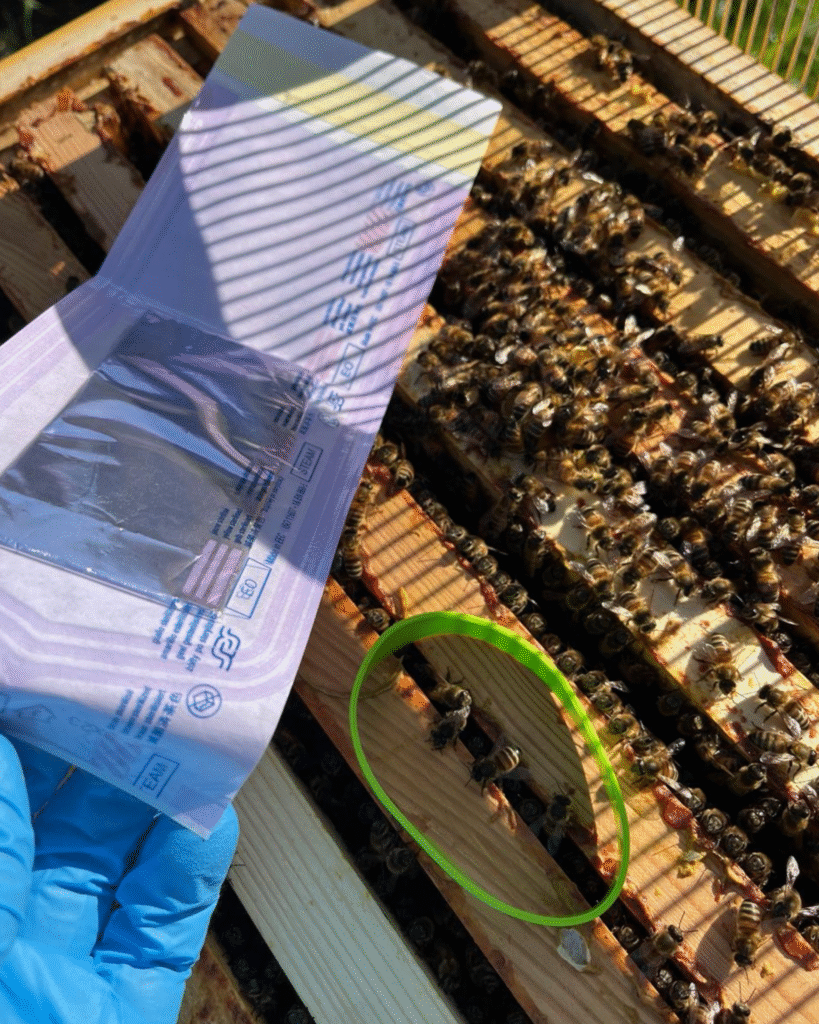
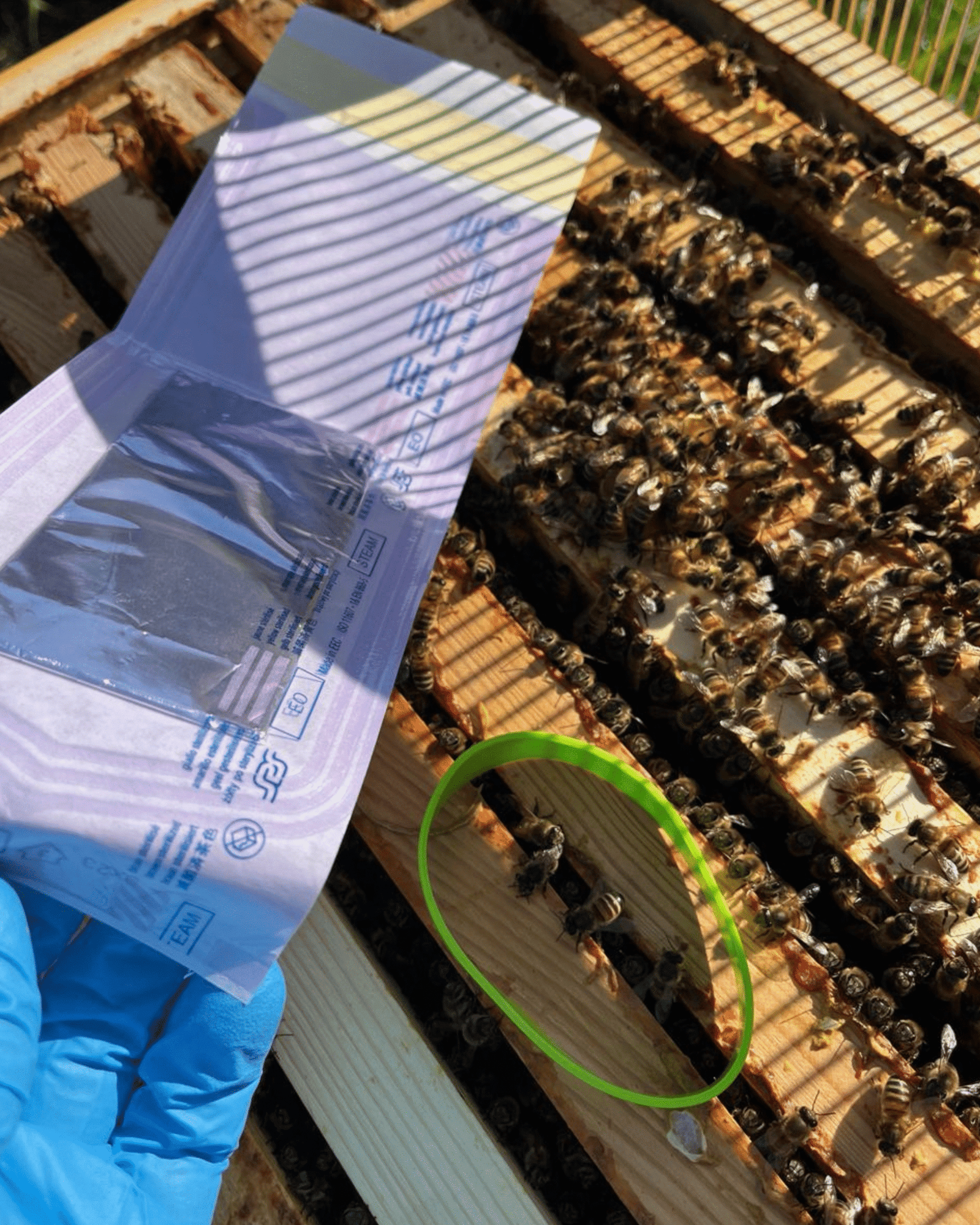
- APIStrip (Absorbing Pesticides In-hive Strips) strips: Scientists have developed special plastic strips containing a contaminant adsorbent, which are placed directly inside the hive between the combs. These strips act as passive samplers – after being analysed in the laboratory, they were found to contain residues of as many as 273 different pesticides and pollutants.
-
- Pollen samples and DNA metabarcoding: Pollen samples were collected from the hives every two weeks using pollen traps. To accurately determine the botanical origin of plants and assess the diversity of flowering plants, state-of-the-art molecular methods were used (DNA metabarkoding).
-
- Spatial modelling: The collected data on pollen and pesticide residues enabled the creation of a spatial modelling system capable of predicting the impact and risk of pesticide mixtures at the level of a specific hive.
-
- A broad spectrum of pollutants: ‘INSIGNIA-EU’ expanded the scope of the research and, in addition to pesticides, assessed heavy metals, polycyclic aromatic hydrocarbons (PAHs), polychlorinated biphenyls (PCBs), particulate matter, microplastics and other pollutants with synthetic effects.
Every day, the bees return having gathered information about everything that is in bloom or lands within their flight range; as a result, the hive has become an excellent natural laboratory in which not only honey but also the overall microenvironment of the hive and other bee products (such as propolis) have been studied.
The Urbanbee.lt experience in Lithuania: unexpected and encouraging results
For us, the Urbanbee.lt team, it was a tremendous honour and responsibility to represent Lithuanian urban areas during this international project. We monitored the bee colonies and carried out meticulous care in the country’s two largest cities – Vilnius and Kaunas. Today, we can wholeheartedly celebrate: the urban honey performed exceptionally well in the ‘INSIGNIA-EU’ studies!
The laboratory data obtained clearly showed that, in terms of purity and the absence of harmful substances, the honey from our cities is perfectly safe to consume.
Why is this the case?
In urban public spaces, the agrochemicals and pesticides commonly found in areas of intensive agriculture are not used. The vegetation in parks, squares, botanical gardens and on residents’ balconies ensures a particularly varied, rich and clean diet for bees throughout the warm season.
The findings of the study clearly showed that urban beekeeping is not only completely safe, but also produces exceptional, high-quality products.
The journey of discovery and a sustainable future continue
Although the ‘INSIGNIA-EU’ project itself and its initial phase have now come to an end, its legacy lives on. Standardised monitoring protocols and the unique data collected during the research continue to be actively used in other international scientific studies and analyses, helping to improve our understanding of changes in biodiversity and the state of the environment across Europe.
During this project, we not only acted as genuine citizen scientists, but also made a direct contribution to a much larger, global goal. Our curiosity and desire to draw on scientific knowledge have not waned. Paulius Chockevičius, the founder of Urbanbee.lt, is a researcher at the Academy of Agriculture at Vytautas Magnus University (VMU) and continues to be actively involved in academic and scientific work. And we at Urbanbee.lt continue to successfully carry out various environmental research projects both in Lithuania and in collaboration with international partners.
For us, observing bees in the city is much more than just beekeeping – it is a meaningful, scientifically grounded way of understanding, protecting and nurturing our environment. Our scientific and educational activities are moving steadily forward!